Best Lenses for Interior Photography
As an Amazon Associate we earn from qualifying purchases. Some links in this guide are affiliate links — see our affiliate disclosure for details.
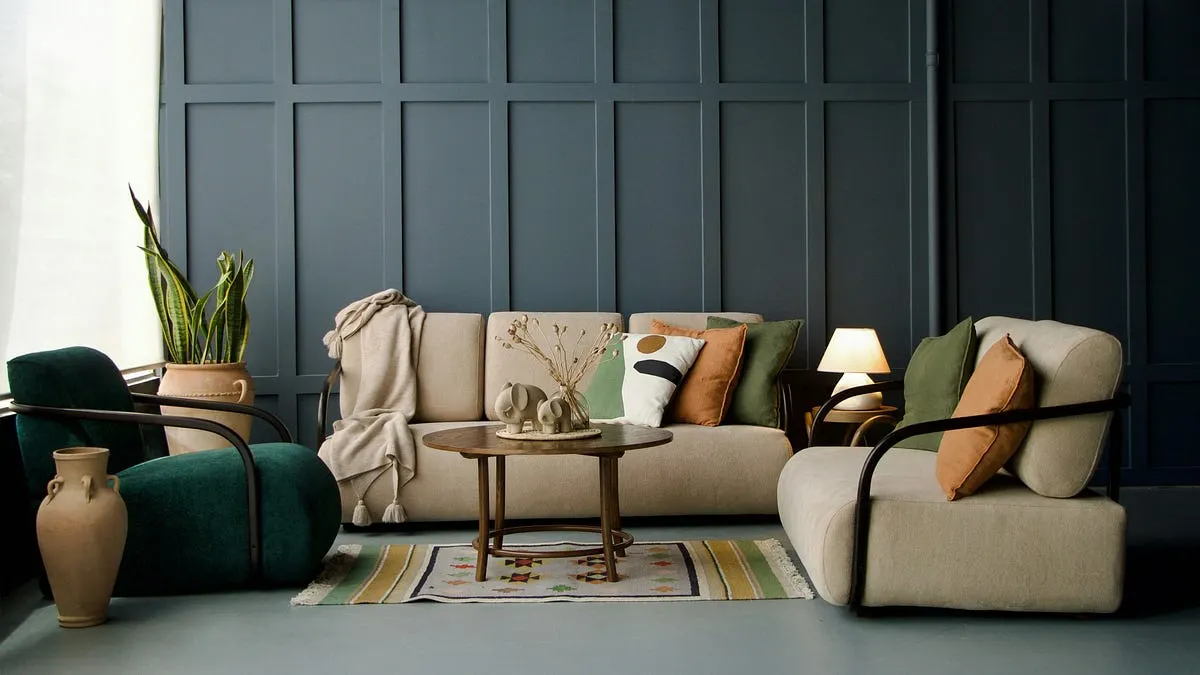
Photo by Hamide Jafari on Unsplash
Interior photography is one of those genres that looks deceptively simple from the outside. You’re not chasing birds at 500mm or tracking a sprinter at 1/2000s. The subject holds still. The light — well, the light is the whole problem.
I started shooting interiors for a friend’s small interior design studio. “Just a few shots of the rooms,” she said. What followed was a humbling education in why lens choice matters more for interiors than almost any other genre. Distortion, vignetting, low light, tight spaces, converging lines — interiors will expose every weakness in your glass.
Here’s what I found works, and why, on the Canon R6 Mark II.
“In interior photography, the lens is doing half the storytelling. It decides how big the room feels, how honest the lines look, and whether the light reads as warm and inviting or flat and clinical.”
Canon RF 14–35mm f/4L IS USM — Check Price on Amazon
Canon RF 15–35mm f/2.8L IS USM — Check Price on Amazon
Canon RF 16mm f/2.8 STM — Check Price on Amazon
Canon RF 24mm f/1.8 Macro IS STM — Check Price on Amazon
Why Interior Photography Demands a Different Kind of Lens
Before we get to specific glass, it’s worth understanding what interiors actually need from a lens — because it’s different from landscapes or portraits.
You need to go wide. Most rooms are not large. A standard 24mm shot from a corner often still can’t fit the whole space. You’ll regularly want 16mm or wider to make a room feel expansive rather than cramped.
But not too wide. Fish-eye distortion — where straight walls bow outward — is the enemy of architectural credibility. You want a rectilinear wide-angle that keeps straight lines straight.
Low light is the norm. Interiors are rarely flooded with studio lighting. Window light, lamp light, mixed sources — your lens needs a wide enough aperture to give the sensor something to work with.
Sharpness corner to corner matters. In a landscape, soft corners are forgivable. In a room shot, a soft, smeared corner where a wall meets the ceiling is immediately noticeable.
The Best Pick: Canon RF 14–35mm f/4L IS USM
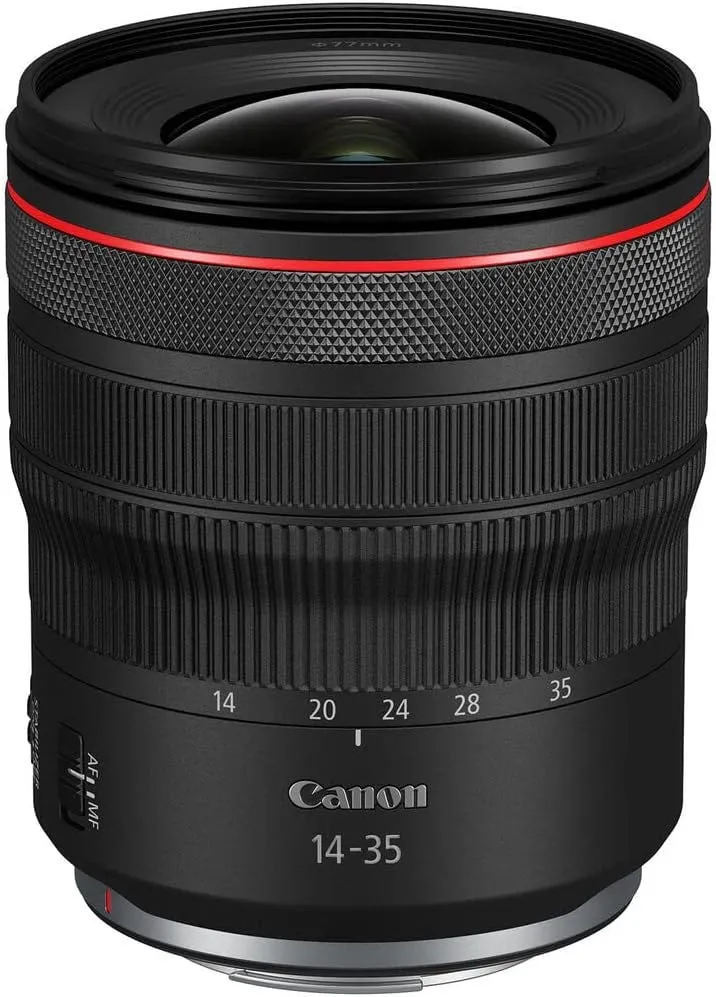
If I had to choose one lens to shoot interiors for the rest of my career, this would be it.
I came to it reluctantly. My instinct was to reach for the RF 15–35mm f/2.8L — the faster, more expensive sibling — but after reading extensively and then spending a month with both, I came back to the f/4 every single time for interior work.
Here’s why: on a tripod (which you should be using for most interior shots anyway), f/4 is absolutely sufficient. Stopping down to f/4 or f/5.6 gives you the depth of field you need to keep everything from the foreground rug to the far wall sharp. The extra stop of the f/2.8 is money you’d spend and rarely use indoors with a tripod.
What the 14–35mm gives you that its sibling doesn’t is that extra millimetre at the wide end — 14mm versus 15mm — which sounds trivial until you’re backed into the corner of a small bedroom with nowhere to go. At 14mm on a full-frame sensor, the room breathes. Lines open up. Spaces that felt impossible to capture suddenly fit the frame.
The distortion control is excellent, especially after in-camera or Lightroom lens correction. Straight lines stay straight. Corners are sharp. The 5-stop image stabilisation means that for quick handheld walkthroughs or video work, the footage stays smooth and stable.
At roughly 540g, it’s also 300g lighter than the f/2.8 version — a difference you genuinely feel after a full day of commercial shooting.
Specs:
- Aperture: f/4 — f/22
- Focal length: 14–35mm
- Image stabilisation: Up to 7 stops combined with IBIS
- Weight: 540g
- Filter thread: 77mm
- Weather sealing: Yes (L-series)
Canon RF 14–35mm f/4L IS USM — Check Price on Amazon
“The first time I shot a small studio apartment at 14mm and the client said it looked twice the size in photos — that was the moment I stopped second-guessing this lens.”
The Premium Choice: Canon RF 15–35mm f/2.8L IS USM
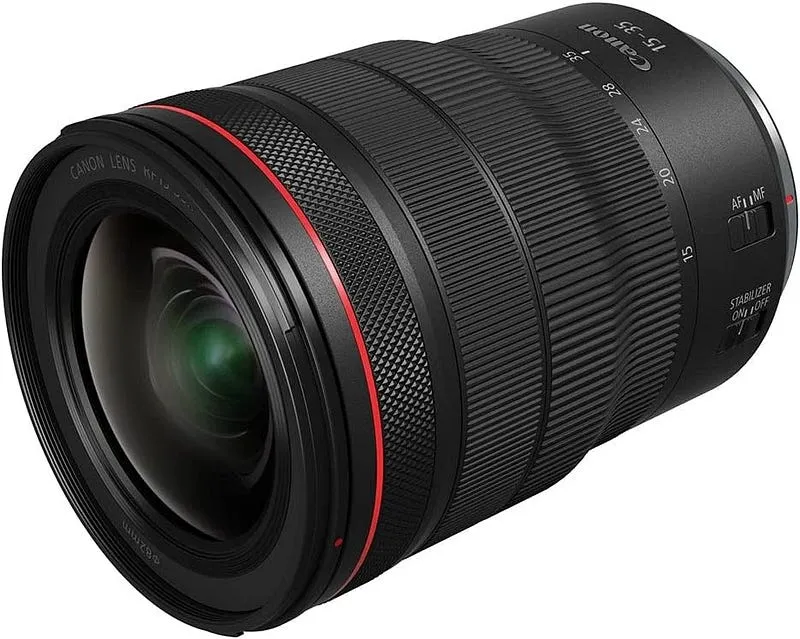
If budget isn’t a concern, or if you regularly shoot interiors in genuinely difficult mixed lighting without a tripod, the RF 15–35mm f/2.8L earns its price.
The extra stop of light matters most in two scenarios: dimly lit spaces where even ISO 3200 isn’t enough, and handheld shooting where you need a faster shutter speed to freeze any accidental camera movement. For hotel room photography at night, restaurant interiors with atmospheric low lighting, or any space where you can’t use a tripod, f/2.8 gives you real, usable latitude.
Corner sharpness is also marginally better on the f/2.8 version at the extreme wide end — not a night-and-day difference, but visible in side-by-side comparisons. If you’re delivering large prints or cropping aggressively, it shows.
The trade-offs are weight (840g), price (nearly double the f/4), and the loss of 1mm at the wide end. For pure interior work, those trade-offs rarely tip the balance. But if this lens will also pull double duty for astrophotography, event coverage, or low-light documentary work, the f/2.8 starts to make a lot more sense.
Specs:
- Aperture: f/2.8 — f/22
- Focal length: 15–35mm
- Image stabilisation: 5-stop
- Weight: 840g
- Filter thread: 82mm
- Weather sealing: Yes (L-series)
Canon RF 15–35mm f/2.8L IS USM — Check Price on Amazon
The Budget Hero: Canon RF 16mm f/2.8 STM
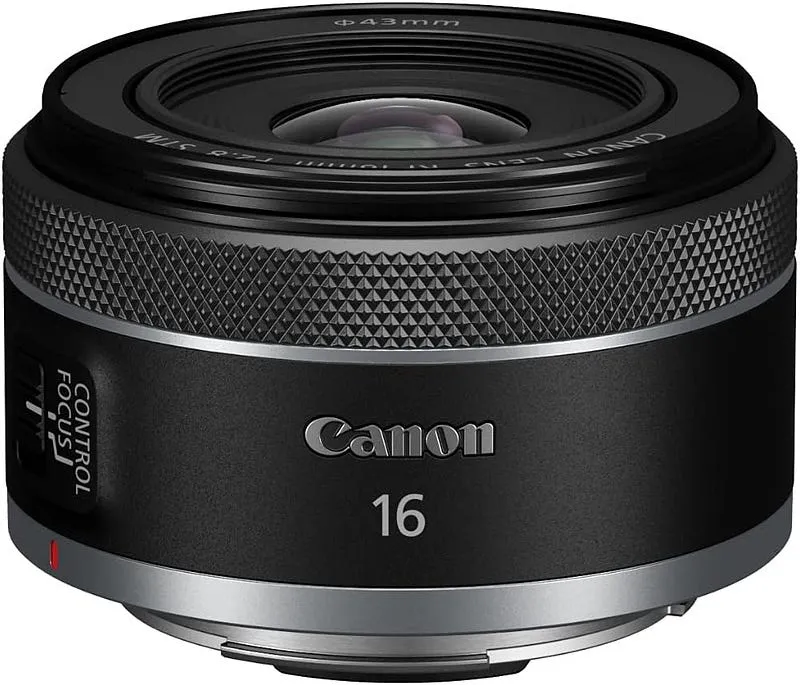
This tiny lens surprised me. At under $300, it has no business being as useful as it is for interior work.
The 16mm prime gives you a genuinely wide field of view — wide enough for most room shots — with an f/2.8 aperture in a package that weighs almost nothing and slips into a jacket pocket. I started keeping it as a backup lens on shoots where my main kit was heavy, and it earned its place permanently.
The caveats are real: there is barrel distortion that requires correction in post, the corners can be soft at f/2.8 (stop down to f/5.6 for interior work), and the build quality is not L-series. This is not a lens for a paid commercial client expecting pixel-perfect results at 100%.
But for a photographer learning interior work, for social media content, for quick walkthroughs and creative ambient shots — it’s an extraordinary value, and the Canon R6 Mark II’s in-body image stabilisation combined with the lens correction profiles handles most of its weaknesses automatically.
Specs:
- Aperture: f/2.8 — f/22
- Focal length: 16mm (prime)
- Image stabilisation: None (relies on camera IBIS)
- Weight: 165g
- Filter thread: 43mm
Canon RF 16mm f/2.8 STM — Check Price on Amazon
The Unexpected Interior Lens: Canon RF 24mm f/1.8 Macro IS STM
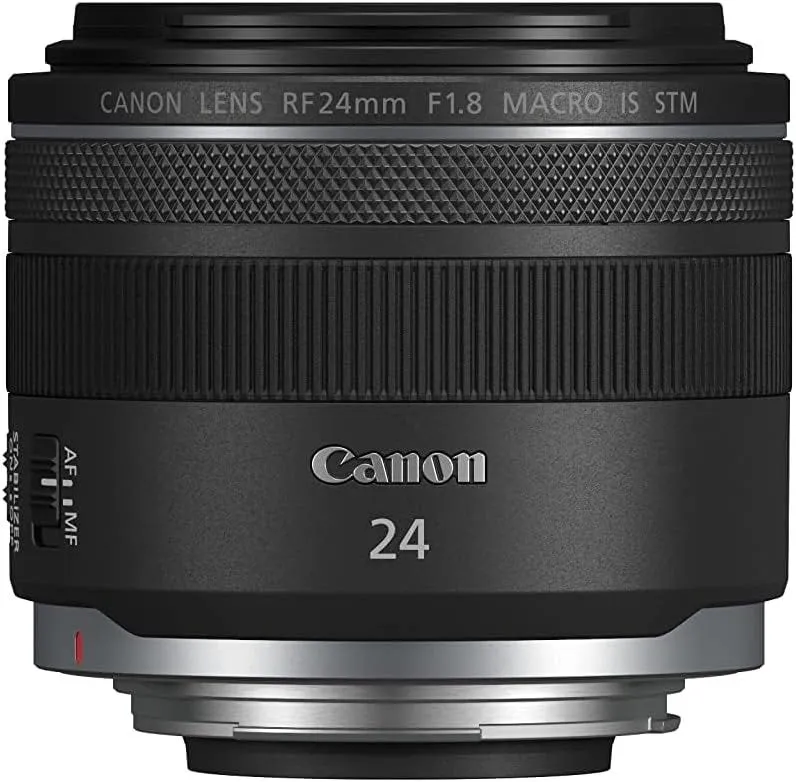
Not every interior shot is a wide establishing shot of a room. Some of the most compelling interior photography zooms in — the texture of a hand-thrown ceramic on a shelf, a perfectly made bed corner, the grain of a reclaimed wood table, a candle flame reflected in a mirror.
For this kind of detail work, the RF 24mm f/1.8 Macro IS STM is quietly remarkable. At 24mm you still have reasonable context around your subject, but the f/1.8 aperture and macro capability let you isolate a detail with beautiful subject separation. The built-in image stabilisation means handheld close-up shots are achievable even in ambient light.
I started bringing this on interior shoots as a second body lens, and the shots it produces give clients something the wide-angle can’t: intimacy. A portfolio of interior photos that mixes grand room shots with close detail work tells a richer story about a space.
Specs:
- Aperture: f/1.8 — f/22
- Focal length: 24mm
- Minimum focus distance: 14cm (macro capable)
- Image stabilisation: 5-stop
- Weight: 270g
Quick Comparison
RF 14–35mm f/4L IS USM Best for: All-round interior work · Aperture: f/4 · Weight: 540g · Price: Mid-high
RF 15–35mm f/2.8L IS USM Best for: Low-light & premium shoots · Aperture: f/2.8 · Weight: 840g · Price: High
RF 16mm f/2.8 STM Best for: Budget & social media · Aperture: f/2.8 · Weight: 165g · Price: Budget
RF 24mm f/1.8 Macro IS STM Best for: Detail & texture shots · Aperture: f/1.8 · Weight: 270g · Price: Mid
A Few Things I Wish I’d Known Earlier
Shoot on a tripod whenever you can. Interiors reward patience. A tripod lets you use lower ISOs, smaller apertures for more depth of field, and longer exposures to soak in ambient light. The R6 Mark II’s IBIS is extraordinary, but a tripod is still the foundation of professional interior work.
Use lens correction profiles. Every wide-angle lens distorts. Lightroom and Canon’s own Digital Photo Professional have profiles for every RF lens that straighten lines and remove vignetting in seconds. Enable them by default — don’t try to fight distortion in the field.
Shoot in natural light when possible. The Canon R6 Mark II’s sensor handles mixed artificial lighting badly — colour casts become hard to neutralise. Whenever you can, shoot with window light as your primary source. Turn off overhead fluorescents if the client allows it.
Vertical shots sell small rooms. A vertical composition at 14mm of a narrow hallway or compact bathroom often reads better than the obvious horizontal wide shot. It’s counterintuitive, but it works.
My Current Interior Kit
For a day of interior or real estate shooting, I carry:
- Canon EOS R6 Mark II (body)
- RF 14–35mm f/4L IS USM (primary lens — on camera 80% of the time)
- RF 24mm f/1.8 Macro IS STM (detail shots on a second body or quick swap)
- A solid travel tripod with a ball head
- A collapsible reflector for bouncing window light
That’s it. Interior photography doesn’t reward gear hoarding — it rewards knowing your tools deeply and working with the available light intelligently.
“The best interior photo isn’t the one taken with the most expensive lens. It’s the one where the photographer understood the light, respected the space, and let the room tell its own story.”
The Canon RF system gives you genuine tools for interior work at every budget level — from the pocket-friendly RF 16mm all the way up to the premium f/2.8L zooms. But if you’re starting out or rationalising your kit, my honest advice is this: get the RF 14–35mm f/4L, put it on a tripod, and spend your energy learning how light moves through a room.
The glass will take care of itself. The light is what you’re really learning to see.
Shooting interiors with a Canon R6 Mark II or a different body? I’d love to see your work — drop a link in the comments or reach out directly.
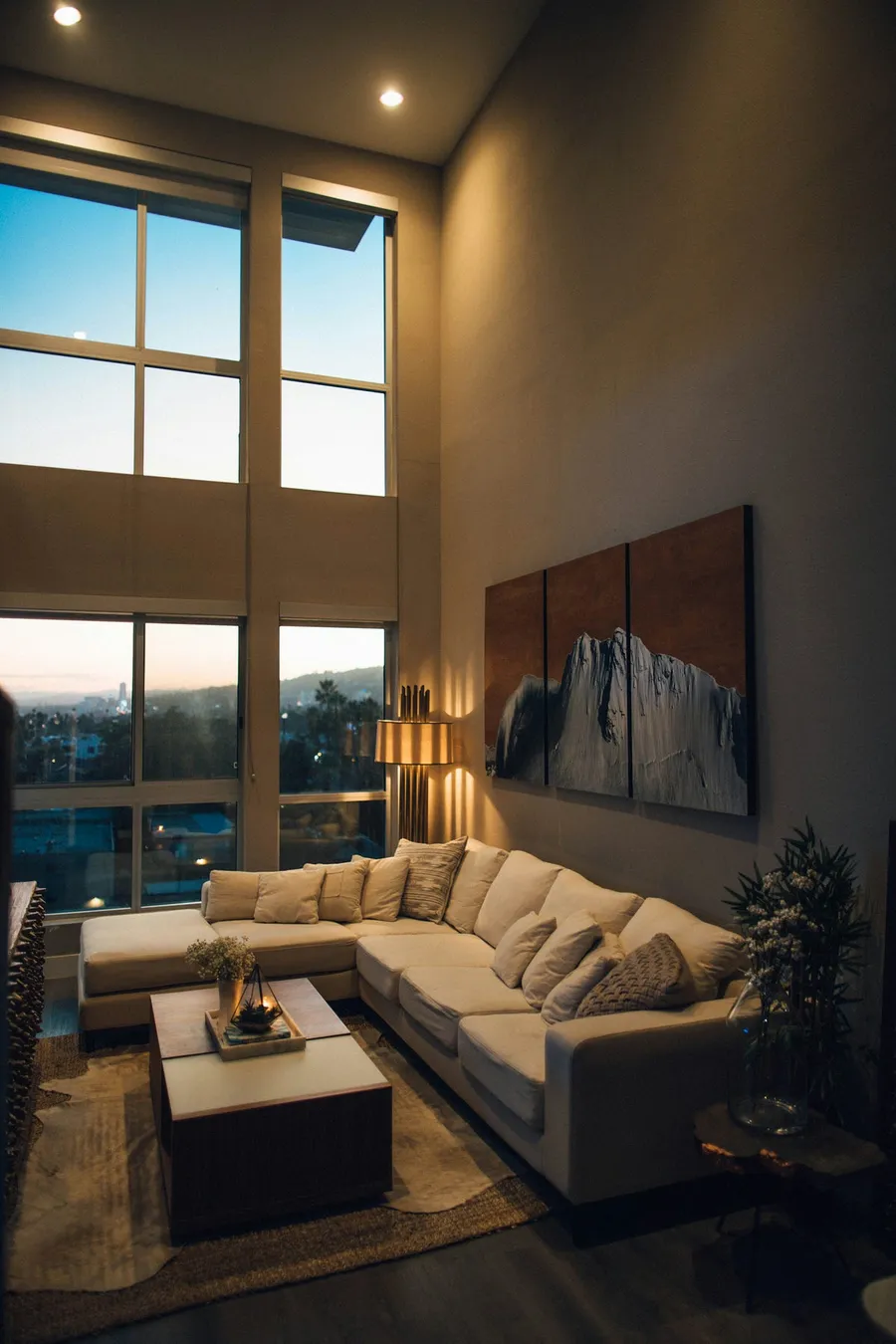
Photo by Roberto Nickson on Unsplash
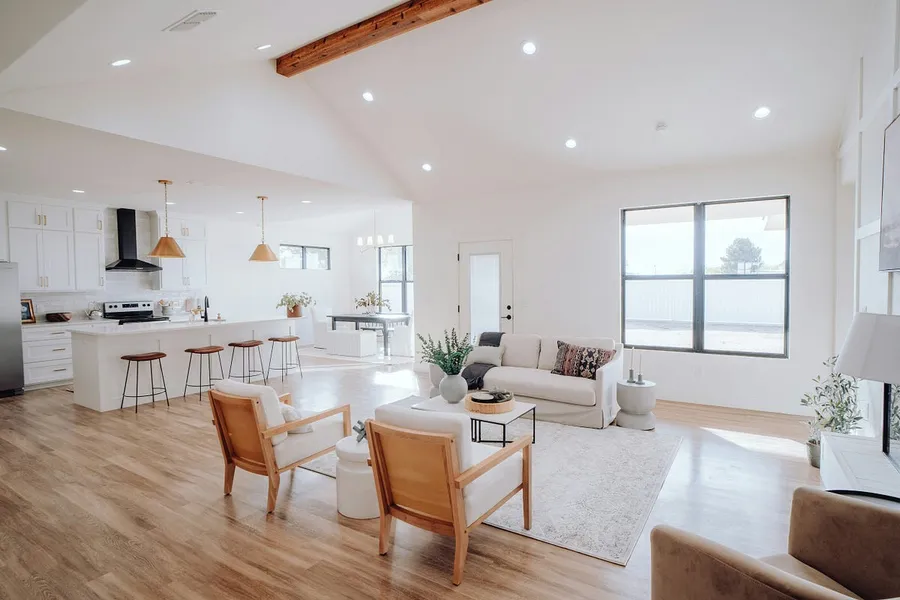
Photo by Bailey Alexander on Unsplash
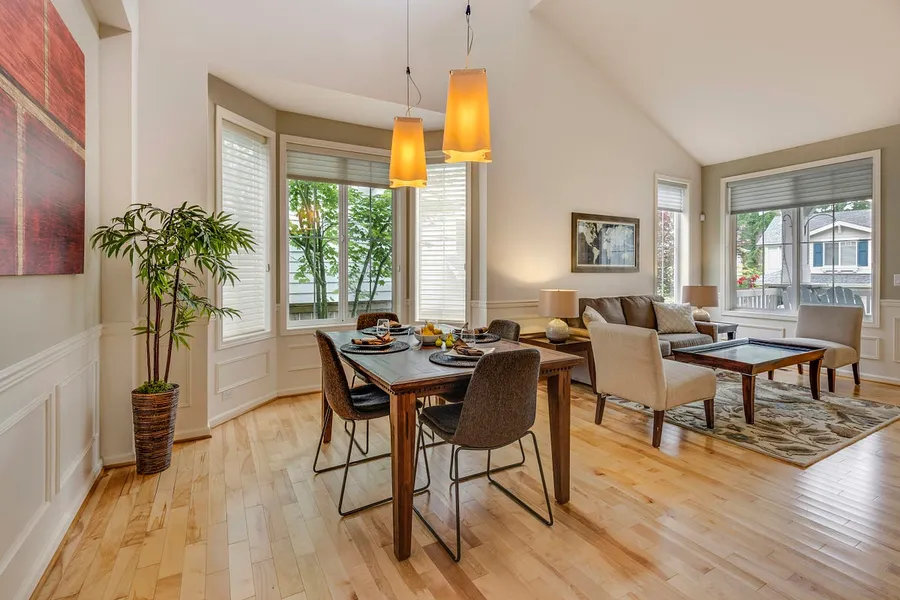
Photo by Francesca Tosolini on Unsplash
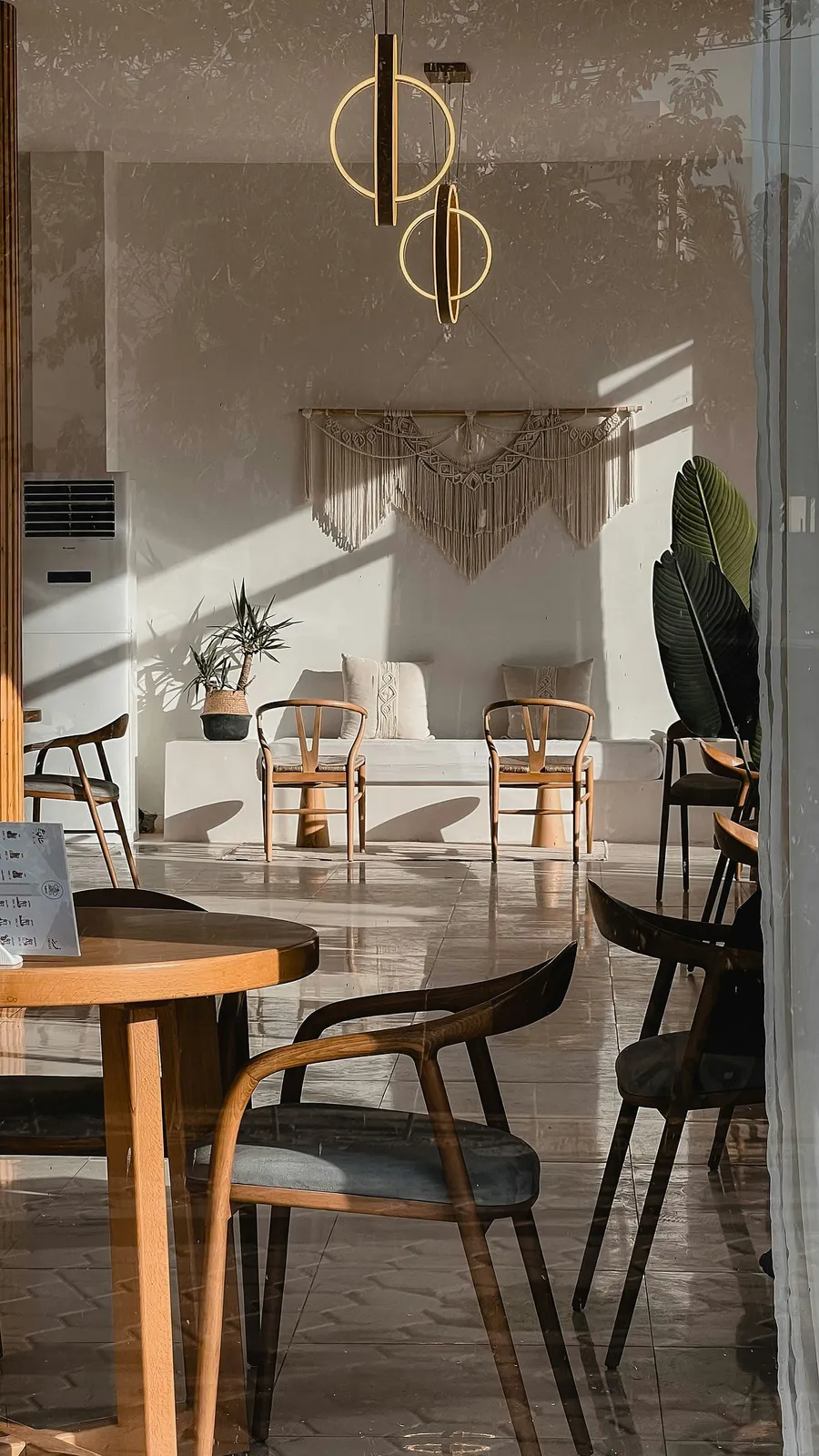
Photo by MOHAMMED SAMI on Unsplash
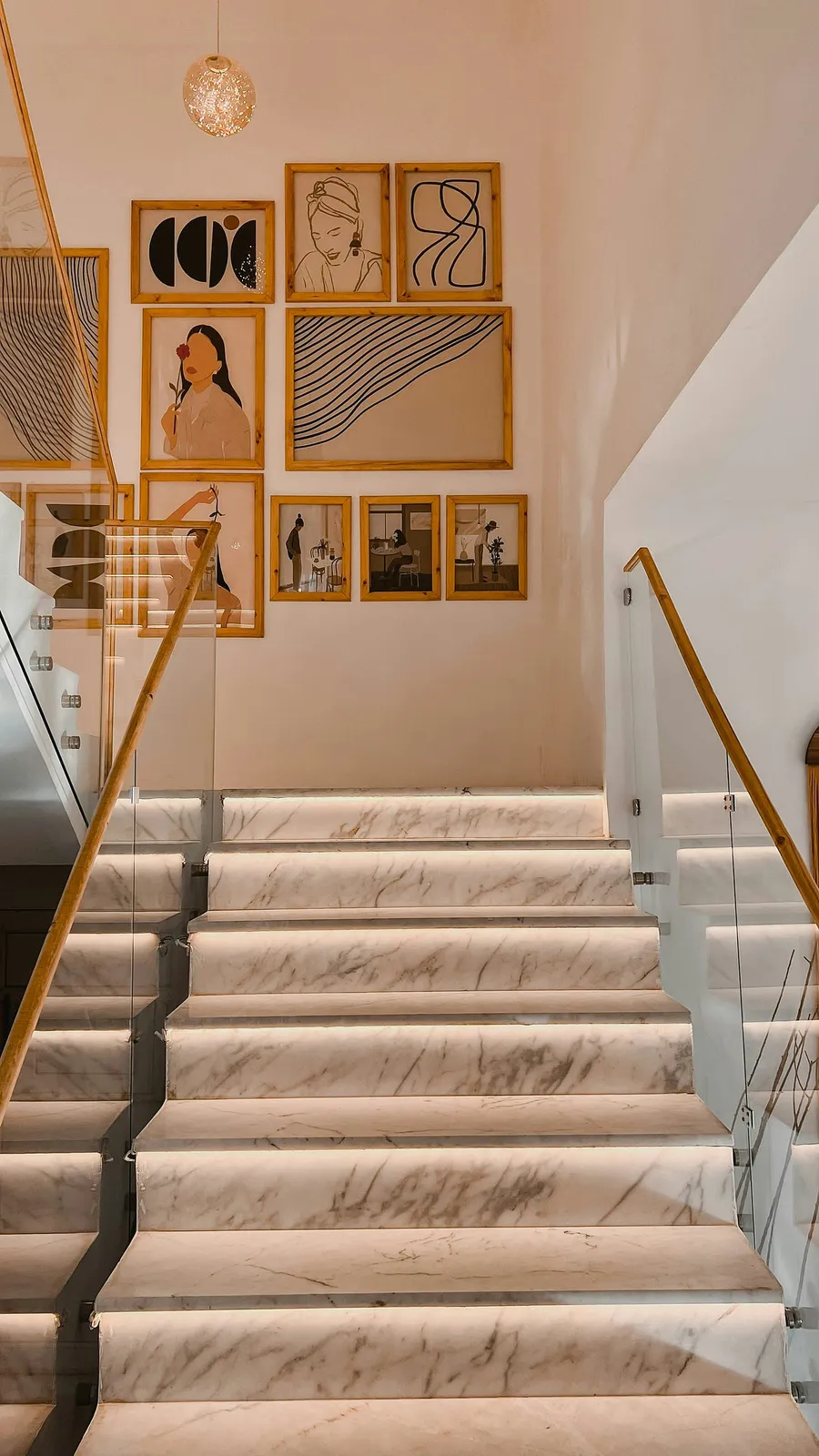
Photo by MOHAMMED SAMI on Unsplash

Written by
Marien CartelProfessional and Certified Digital Photographer born in the USA, with 22 years of experience in the field of photography.
Related Guides

Best Lens for Panasonic LUMIX S5: (2026 Guide & Reviews)
Unlocking the Cinematic Soul of the L-Mount System
Best Lens for Wide Shots
The Ultimate Guide to the Best Lens for Wide Shots: Field-Tested Review & Personal Experience
Best Prime Lens for Landscape Photography
How a Foggy Sunrise Taught Me Why Less Glass Means Better Shots