Canon 6D vs Canon 6D Mark II
As an Amazon Associate we earn from qualifying purchases. Some links in this guide are affiliate links — see our affiliate disclosure for details.
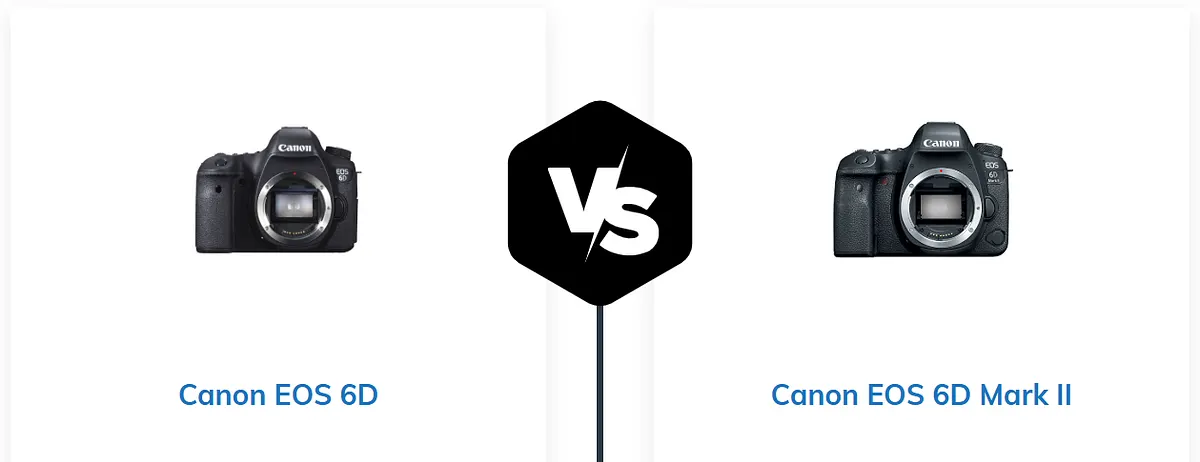
As a passionate photographer, my journey into the world of full-frame cameras began with the Canon 6D. Over the years, I have experienced the evolution of this line with the introduction of the Canon 6D Mark II. In this blog, I will share my personal experiences with both cameras, highlighting their strengths and weaknesses, and ultimately helping you decide which one might be right for you.
Canon 6D — View on Amazon
Canon 6D Mark II — View on Amazon
My First Encounter with the Canon 6D
When I first picked up the Canon 6D, I was captivated by its compact design and full-frame capabilities. It was a significant upgrade from my previous crop-sensor camera. The 20.2-megapixel full-frame sensor allowed me to explore new dimensions in photography, especially in low-light situations.
I remember shooting at a friend’s wedding; the ability to push the ISO up to 12,800 without losing too much detail was a game-changer for me. The images had a richness and depth that I had never achieved before.
Canon 6D — View on Amazon
Canon 6D Mark II — View on Amazon
The built-in GPS and Wi-Fi were also features that I found incredibly useful. Being able to geotag my images and transfer them wirelessly to my phone made sharing moments easy and efficient. However, I did encounter some limitations with the 11-point autofocus system, which felt somewhat outdated compared to newer models.
Transitioning to the Canon 6D Mark II
Fast forward a few years, and I decided to upgrade to the Canon 6D Mark II. The first thing that struck me was its improved resolution — 26.2 megapixels compared to the original’s 20.2. This increase allowed for more detailed images, which was particularly beneficial when cropping or printing large formats.
One of my favorite features of the Mark II is its vari-angle touchscreen. This flexibility allowed me to shoot from unique angles without straining myself or missing a shot. During a recent travel photography session in the mountains, this feature proved invaluable as I captured breathtaking landscapes from both high and low perspectives.
The autofocus system also saw significant improvements, boasting 45 cross-type AF points that provided faster and more accurate focusing in various conditions. I found this particularly helpful during action shots, where timing is everything.
However, not everything about the Mark II was perfect. While it excelled in many areas, I noticed that some users found the autofocus points clustered in the center of the frame challenging for composition. Additionally, there was no joystick for quickly selecting focus points — a feature that many photographers have come to appreciate in newer models.
Canon 6D — View on Amazon
Canon 6D Mark II — View on Amazon
Pros and Cons of Each Camera
Canon 6D
Pros:
- Excellent low-light performance with great image quality at high ISOs.
- Compact and lightweight design suitable for travel.
- Built-in GPS and Wi-Fi for easy sharing and geotagging.
- Solid build quality with an intuitive interface.
Cons:
- Limited autofocus system with only 11 points.
- No pop-up flash or advanced video features.
- Slightly lower resolution compared to newer models.
Canon 6D Mark II
Pros:
- Higher resolution (26.2 MP) for more detailed images.
- Improved autofocus system with 45 cross-type points.
- Vari-angle touchscreen enhances shooting flexibility.
- Dual Pixel CMOS AF for better video performance.
Cons:
- Autofocus points clustered in the center can hinder composition.
- No joystick for quick focus point selection.
- Some users may find it heavier than the original model.
Canon 6D — View on Amazon
Canon 6D Mark II — View on Amazon
Conclusion: Which One Is Right for You?
Choosing between the Canon 6D and Canon 6D Mark II ultimately depends on your specific needs as a photographer. If you are just starting your journey into full-frame photography or are on a budget, the original Canon 6D remains an excellent choice with its fantastic low-light capabilities and ease of use.
Canon 6D — View on Amazon
Canon 6D Mark II — View on Amazon
On the other hand, if you are looking for enhanced features like higher resolution, better autofocus performance, and greater versatility in shooting angles, then investing in the Canon 6D Mark II would be worthwhile.
Reflecting on my experiences with both cameras has solidified my appreciation for what each offers. Both have played pivotal roles in my development as a photographer, allowing me to capture memories that will last a lifetime. Whether you choose the classic charm of the Canon 6D or the modern advancements of the Mark II, you will find that both cameras have their unique strengths that can elevate your photography game.

Photo by Berkay Gumustekin on Unsplash


Written by
Marien CartelProfessional and Certified Digital Photographer born in the USA, with 22 years of experience in the field of photography.
Related Guides
Nikon Z8 Review
A Professional Photographer’s Comprehensive Review — my picks are the Nikon Z8, Canon EOS R5 and Sony a1, with the honest trade-offs of each.
Nikon Zf vs Fujifilm X100VI
The Tactile Dilemma: Why the Fujifilm X100VI and Nikon Zf Forced Me to Rethink Everything
Ricoh GR III vs Fujifilm X100VI
The Camera I Almost Didn’t Buy, and the One I Almost Returned: the Fujifilm X100VI and Ricoh GR III side by side, and the one I would pick myself.