Best Camera for ASMR Content Creators

As an Amazon Associate we earn from qualifying purchases. Some links in this guide are affiliate links — see our affiliate disclosure for details.
Photo by Vitaly Gariev on Unsplash
I spent six months making ASMR content before I realized my camera itself was the loudest thing in every recording. Not the microphone, not the room, not anything I was tapping or crinkling on purpose — the camera. A faint, constant whir from the internal fan, sitting just close enough to my external mic to bleed into every single upload as a low, persistent hum underneath the whispers.
- Panasonic Lumix G100D — View on Amazon
- Sony ZV-1 — View on Amazon
Affiliate note: This post has affiliate links. If you buy through them, I might earn a small commission (at no extra cost).
The Slow, Humiliating Realization
I got into ASMR almost sideways, through a fascination with close-up macro photography that turned into recording the sounds of things I was already filming — brushes, paper, water, the particular crunch of specific objects. The visual side felt like the easy part. I had a decent mirrorless camera, a reasonable macro lens, good lighting. What I didn’t have, for far longer than I’d like to admit, was any real understanding of how much a camera’s mechanical parts matter for a genre built entirely around silence and subtle sound.
The first hint something was wrong came from comments — a few viewers mentioning a “weird background hum” I genuinely couldn’t hear over my own headphones while editing. I chalked it up to compression artifacts from the upload. It wasn’t until I recorded a completely silent test clip, camera running, mic live, room otherwise dead quiet, that I heard it myself: a low, steady whir from my camera’s internal cooling fan, audible enough on good headphones to undercut months of careful whisper-level audio work.
What ASMR Content Actually Demands From a Camera
That discovery sent me down a genuinely different research path than most photography gear guides cover, because ASMR has requirements that barely overlap with typical vlogging or content creation advice:
Silent or near-silent operation, mechanically. No audible fan noise, no loud autofocus motor hunting for focus, ideally no mechanical shutter sound at all. This is the single most overlooked spec in camera reviews, because almost nobody else needs it.
True macro or very close focusing distance. ASMR content lives in extreme close-ups — brush bristles, water droplets, texture detail. A camera that can’t focus closer than a foot or two is immediately limiting.
Flip screen for solo, precise framing. You’re often positioning objects inches from the lens while alone, and getting that framing right without a second person means seeing your own composition clearly.
A body that runs cool without active cooling. Fanless doesn’t automatically mean silent — some bodies still produce faint operational noise under load. What matters is genuinely quiet performance during long, static recording sessions, not just on paper.
The Camera That Actually Solved It
After the hum discovery, I did serious research and switched to a Panasonic Lumix G100D, and it fixed the problem completely. It has no active cooling fan, its autofocus motor is genuinely quiet in practice, and — a detail I didn’t expect to matter as much as it did — its directional microphone array, while I don’t rely on it for final audio, made monitoring far easier during setup since I could actually hear the room accurately without a mechanical hum masking small sounds. Paired with a macro lens, it handled the close-focus demands of ASMR content without hesitation.
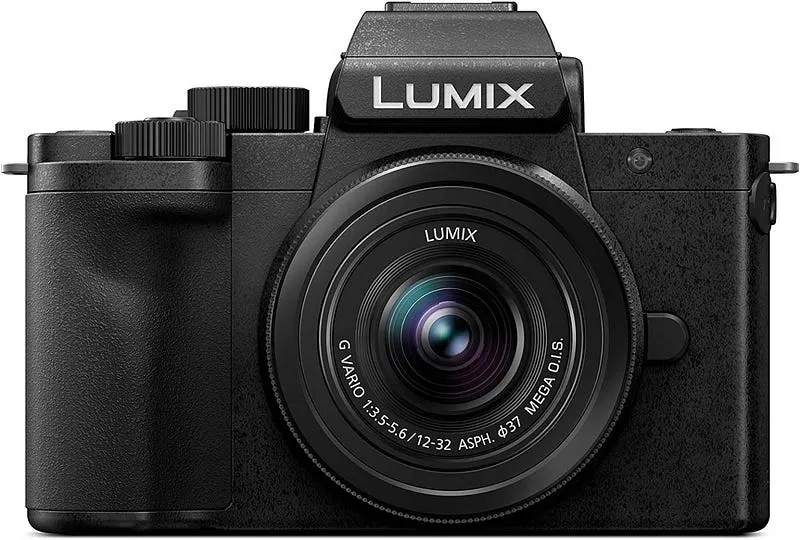
This camera is perfect for anyone looking to take their photography or videography to the next level.
Panasonic Lumix G100D — View on Amazon
For handheld, more mobile ASMR-adjacent content — think unboxing-style or tapping content where I’m moving the camera slightly rather than keeping it locked down — I’ve also used the Sony ZV-1 line. It’s compact, genuinely quiet in operation, and its close-focus performance handles detail work better than most compact cameras in its price range, even if it’s not purpose-built for ASMR specifically.
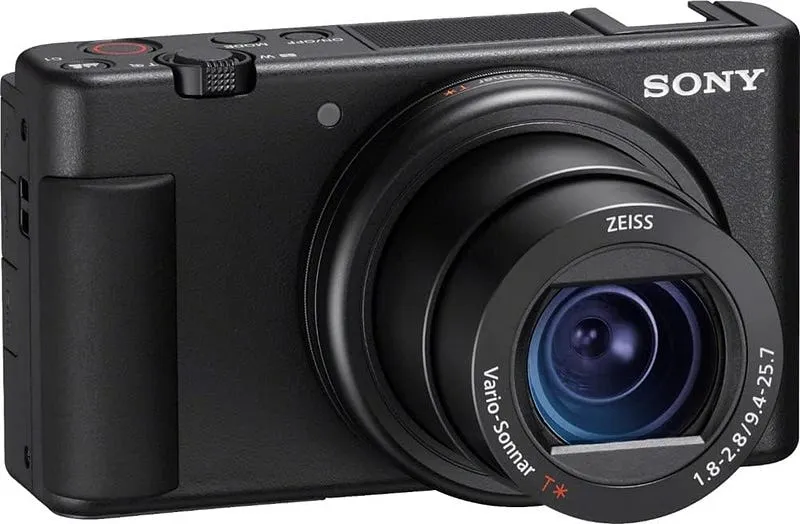
This camera is perfect for all my content creation needs! The flip screen and mic make it so easy to use.
The Lesson I Wish I’d Learned Faster
I’d actually already understood the general principle behind close-up, detail-focused content — I wrote about exactly that kind of work in my guide to the best camera for makeup artists, where getting genuinely close, accurate detail shots mattered enormously. What I completely failed to account for with ASMR specifically was sound — that a camera silent enough for visual work isn’t automatically silent enough to sit next to a sensitive microphone for thirty minutes of whispered content. It’s a genuinely different bar, and almost no general camera guide mentions it, because almost no other genre needs it.
My Actual Recommendation
If you’re building an ASMR setup from scratch, get the Panasonic Lumix G100D paired with a macro lens. Its fanless, quiet operation and genuine close-focus capability solve the two biggest problems ASMR creators run into without realizing it until months in, like I did. If you want something more compact and mobile for handheld detail work, the Sony ZV-1 is a strong, quieter-than-average alternative.
Does camera noise really matter if I’m using an external microphone?
Yes, more than most creators expect. Sensitive external mics used for ASMR pick up extremely quiet sounds, including faint mechanical noise from a nearby camera that would be completely inaudible in normal content creation.
What lens is best for ASMR close-up shots?
A dedicated macro lens, or at minimum a lens with a close minimum focusing distance, is essential. Standard kit lenses often can’t focus close enough for genuine detail work like brush bristles or liquid droplets.
Can I use my phone camera for ASMR content instead of a dedicated camera?
For casual content, yes, though most phones can’t match a dedicated camera’s macro focusing distance or the shallow depth of field that makes close-up ASMR visuals feel intentional and polished rather than flat.
Written by
Marien CartelProfessional and Certified Digital Photographer born in the USA, with 22 years of experience in the field of photography.
Related Guides
Best Camera for Automotive Photography
What I Actually Reach For When I’m Shooting Cars. Here is how the Canon EOS R5, Sony a7 IV and Nikon Z6 III compare, and the one I keep going back to.
Best Cameras for Virtual Production
After I Wasted a Full Shoot Day Finding Out — why the Sony FX6 and Sony FX9 made the list, and who each one really suits.
Best DSLR Cameras for Beginners: (Guide & Reviews)
My Hands-On Experience with the Best Beginner-Friendly Cameras — why the Canon EOS Rebel T7 and Nikon D3500 made the list, and who each one really suits.