Best Camera for Interior Design Photography
As an Amazon Associate we earn from qualifying purchases. Some links in this guide are affiliate links — see our affiliate disclosure for details.
For interior design photography, a full-frame camera like Canon 5D Mark IV and a versatile lens, like Canon EF 24–70 f/2.8, are recommended. Consider a tilt-shift lens for correcting perspective distortion. Beginners can also consider a mid-range DSLR like the Canon 80D or Canon 90D.
Key Camera and Lens Recommendations:
- Full-frame cameras: These offer higher resolution and better low-light performance, making them suitable for professional interior design photography.
- Canon 5D Mark IV: This is a popular choice for interior design photography. View on Amazon
- Canon EOS R: A professional-level mirrorless camera from Canon. View on Amazon
- Canon 80D: These are good options for beginners. View on Amazon
- Sony a7R5: A high-resolution full-frame mirrorless camera. View on Amazon
- Nikon Z8: A full-frame mirrorless camera from Nikon. View on Amazon
- Canon R5: A full-frame mirrorless camera from Canon. View on Amazon
Lenses:
- Canon EF 24–70 f/2.8:
- A versatile zoom lens that can handle both wide-angle shots and detail shots. View on Amazon
- Canon 24mm Tilt-Shift:
- This lens is useful for correcting perspective distortions, especially in interiors. View on Amazon
- Canon 24–105mm f/4 IS II USM:
- A good option for interior photography, especially if you need to get in a little tighter. View on Amazon
- Tilt-shift lenses:
- These are essential for architectural and interior photography to correct perspective and prevent lines from converging at the corners.
Additional Tips:
- Tethering:
- Connecting your camera to a computer or iPad allows you to see your shots on a larger screen and makes it easier to check for details and make adjustments.
- Lighting:
- Interior design photography often involves working with natural light, but you may also need to use artificial light sources like flashes or continuous lights.
- Post-processing:
- Software like Adobe Photoshop or Lightroom can be used to adjust colors, contrast, and other aspects of the photos.
- Tripod:
- A tripod is crucial for sharp, stable shots, especially in low-light situations or when using longer shutter speeds.
- Camera settings:
- Using a low ISO (around 100), an aperture of f/4 or lower for portraits, and f/11 for wide shots can help to achieve the desired results.
My Journey to Capturing Stunning Interior Designs
For years, I’ve been captivated by the art of interior design. The way a space can transform with the right colours, textures, and furniture placement is nothing short of magic. As my passion grew, so did my desire to capture that magic, to freeze those perfectly curated moments in time. But as I quickly learned, photographing interiors is an art form in itself, and having the right tools is paramount. This is my journey to finding the best camera and lenses for interior design photography, a path filled with trial, error, and ultimately, some truly breathtaking shots.
When I first started, I was armed with my trusty smartphone. While it was great for quick snaps, I soon realized its limitations. The images lacked depth, struggled in low light, and often distorted the beautiful lines of the rooms I was trying to capture. That’s when I knew I needed to upgrade.
My initial research was overwhelming. Forums and articles were packed with technical jargon. But one thing became clear: for professional-looking interior shots, a full-frame camera was highly recommended. Why? Full-frame sensors are larger, meaning they capture more light and detail. This translates to higher resolution images and significantly better performance in those tricky, dimly lit corners that often define a room’s ambiance.
I remember borrowing a friend’s Canon 5D Mark IV for a weekend project. The difference was astounding. Suddenly, the rich textures of a velvet armchair and the subtle interplay of light and shadow on a gallery wall came to life in my photos. This camera, a popular choice among professionals, truly opened my eyes. Similarly, I’ve heard incredible things about other full-frame powerhouses like the Canon EOS R, Sony a7R5, Nikon Z8, and the Canon R5. These mirrorless options offer cutting-edge technology and are fantastic for capturing the nuances of interior spaces.
However, not everyone is ready to dive into the deep end with a top-tier professional camera, and that’s perfectly okay! When I was taking my first serious steps, something like a Canon 80D or 90D would have been an excellent starting point. These mid-range DSLRs offer a fantastic balance of features and affordability, allowing you to learn the ropes without breaking the bank.
But a camera body is only half the story. The lens you choose is arguably even more critical. My first “aha!” moment with lenses came when I invested in a versatile Canon EF 24–70mm f/2.8. This lens became my workhorse. The 24mm wide-angle end allowed me to capture the entirety of a room, showcasing its scale and flow, while the 70mm end was perfect for zooming in on those little details — a beautifully crafted vase, the texture of a rug, or the way light hit a piece of art. The f/2.8 aperture was a game-changer for low-light situations, allowing me to shoot with faster shutter speeds and avoid blurry images. Another great versatile option I’ve come across is the Canon 24–105mm f/4 IS II USM, which offers a bit more reach if you need to get in tighter on specific elements.
Then came the challenge of perspective distortion. You know, when vertical lines like walls or doorways appear to converge or lean in your photos? This was a constant frustration until I discovered the magic of tilt-shift lenses. While they are a more specialized (and often pricier) investment, a lens like the Canon 24mm Tilt-Shift is invaluable for serious architectural and interior photography. It allows you to correct those converging lines directly in-camera, saving you a ton of time in post-processing and ensuring your images accurately represent the space. For anyone serious about making their interior photos look professionally polished, a tilt-shift lens is a worthy consideration.
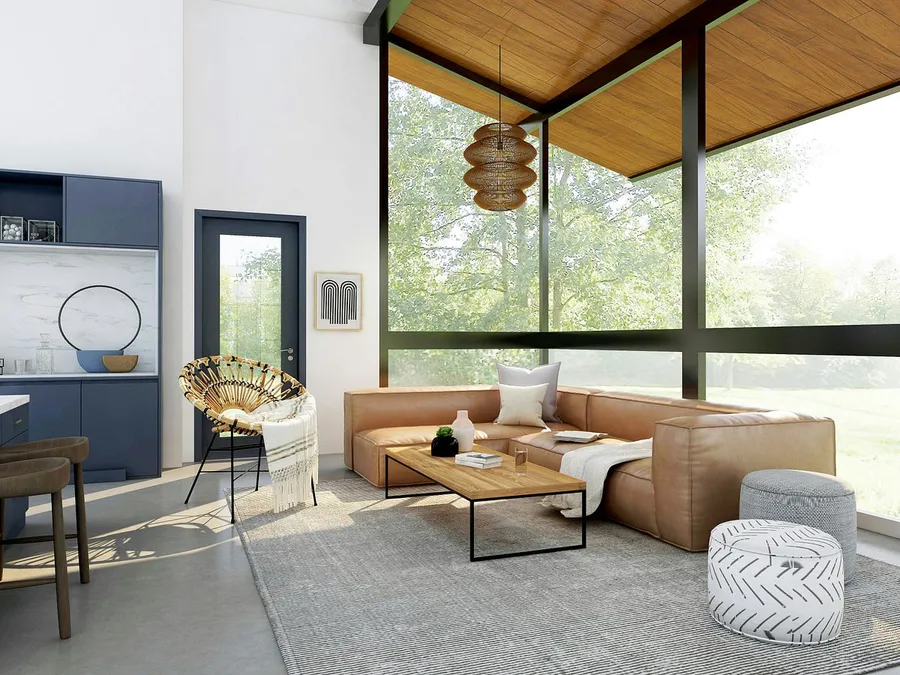
Photo by Collov Home Design on Unsplash
Written by
Marien CartelProfessional and Certified Digital Photographer born in the USA, with 22 years of experience in the field of photography.
Related Guides
Best Camera for Automotive Photography
What I Actually Reach For When I’m Shooting Cars. Here is how the Canon EOS R5, Sony a7 IV and Nikon Z6 III compare, and the one I keep going back to.
Best Cameras for Virtual Production
After I Wasted a Full Shoot Day Finding Out — why the Sony FX6 and Sony FX9 made the list, and who each one really suits.
Best DSLR Cameras for Beginners: (Guide & Reviews)
My Hands-On Experience with the Best Beginner-Friendly Cameras — why the Canon EOS Rebel T7 and Nikon D3500 made the list, and who each one really suits.