Best Mid-Range Canon Camera
As an Amazon Associate we earn from qualifying purchases. Some links in this guide are affiliate links — see our affiliate disclosure for details.
For years, my trusty Canon 70D was my photographic limb. It captured family milestones, travel adventures, and even paid gigs as I dipped my toes into professional waters. But as ambitions grew — faster action, cleaner low-light shots, professional video aspirations — the 70D started showing its age. The autofocus hunted in dim cafes, high ISO shots looked like abstract paintings, and 1080p video felt… well, last decade. I was stuck in the frustrating gap between entry-level and the stratospheric (and stratospherically priced) pro bodies.
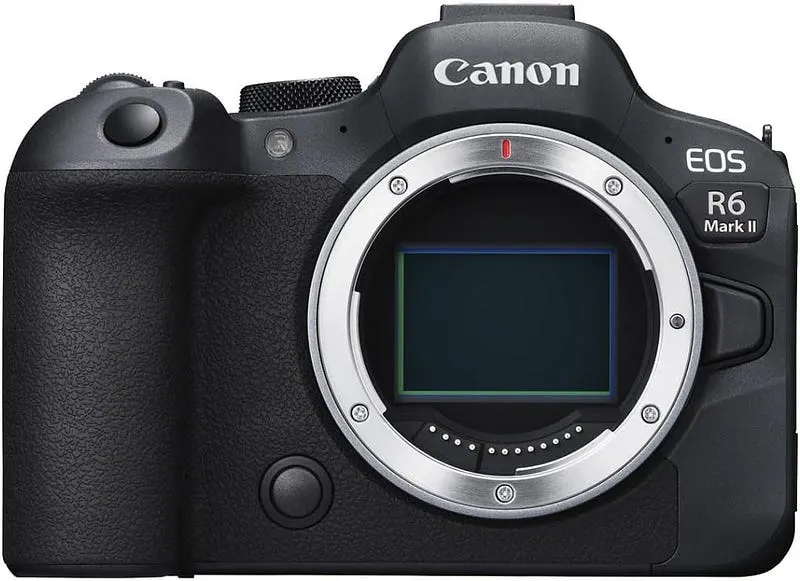
Enter the Canon EOS R6 Mark II. After months of research, wrestling with specs, reviews, and my budget spreadsheet, I pulled the trigger. It wasn’t just an upgrade; it felt like stepping into a completely new era of imaging. And after a year of intense use — from frantic weddings to serene landscapes — I’m convinced it’s the absolute sweet spot in Canon’s mid-range lineup.
My Journey: From DSLR Frustration to Mirrorless Nirvana
My breaking point was a friend’s indoor birthday party. Candlelight, moving subjects, fleeting expressions. My 70D struggled. Missed focus, noisy images, the constant chunk-chunk-chunk of the mirror felt obtrusive. Reviewing the shots later was disheartening. I knew I needed better low-light performance, faster and smarter autofocus, and the flexibility of mirrorless.
I considered the original R6 (heard whispers of overheating), the R8 (felt a bit too stripped down, missing IBIS), and even eyed the R5 (my bank account audibly whimpered). The R6 Mark II emerged as the perfect compromise: addressing the Mark I’s minor niggles while packing a serious punch at a price point that didn’t require selling a kidney.
Unboxing & First Impressions: Where “Mid-Range” Feels Premium
Holding the R6 Mark II immediately signaled a step up. The magnesium alloy body feels dense, solid, and weather-sealed — a confidence boost when caught in unexpected drizzle. The grip is deep and comfortable, a Canon hallmark. The controls felt instantly familiar (goodbye, steep learning curve!), yet more refined than my old DSLR. The fully articulating touchscreen was a revelation for video and awkward angles.
Where the R6 Mark II Truly Shines (Through My Lens)
- Autofocus That Reads Minds (Almost): This is the game-changer. Canon’s Dual Pixel CMOS AF II is witchcraft. Human eye detection? Flawless, even through glasses or slightly turned heads. Animal eye AF? My dog, previously a blurry brown streak, is now tack-sharp in every playful leap. Car/Bike tracking? Essential for motorsports or kids on bikes. It locks on with terrifying speed and accuracy, even in challenging light. At a recent wedding, capturing the groom’s tearful reaction as the bride walked down the aisle — perfectly focused, first try, in dim church lighting. That moment alone justified the purchase. The 40fps electronic shutter (with AF/AE!) is insane for action. Birds in flight? No longer a lottery.
- Low Light Liberator: The 24.2MP full-frame sensor is a low-light beast. Where my 70D would tap out at ISO 3200, the R6 Mark II delivers clean, usable images at ISO 12800 and even 25600 with careful processing. Shooting a live band in a moody bar? No flash needed. Candlelit dinners? Rich detail, not noisy mush. This freedom is transformative.
- Stabilization Sorcery (IBIS + Lens IS): Combining the 5-axis in-body stabilization with lens IS gives up to 8 stops of shake reduction. Handheld 1-second exposures? Possible. Smooth video walking shots without a gimbal? Absolutely. Shooting my nephew’s football game with a 100–400mm lens handheld felt stable and fluid. This feature alone saves weight and setup time.
- Video Powerhouse (For Real This Time): The original R6’s overheating issues were a major concern. Canon listened. The Mark II delivers oversampled 4K/60p (from 6K) and uncropped 4K/30p with vastly improved heat management. I’ve shot 30+ minute interviews in 4K/30p on warm days without a single warning. 10-bit 4:2:2 internal (C-Log 3/HDR PQ) gives serious grading flexibility. Full HD at 180fps for buttery slow-mo? Check. It’s genuinely hybrid — equally capable for stills and video creators.
- Speed Demon & Buffer Beast: That 40fps electronic shutter is blistering. But crucially, the buffer is deep. Shooting RAW bursts at a tennis match? It just keeps going. The mechanical shutter is a respectable 12fps. The new sensor scan speed also drastically reduces rolling shutter in e-shutter mode.
- Usability & Refinements: Little things add up:
- The new multi-function shoe powers accessories like the DM-E1D mic without cables.
- Dual UHS-II SD card slots (not CFexpress) — more affordable media.
- Improved menus and a fantastic viewfinder.
- Reliable Bluetooth/Wi-Fi connectivity.
- Surprisingly good battery life (I always carry a spare, but it lasts).
The “Mid-Range” Reality Check (It’s Not Perfect)
Let’s be honest, no camera is flawless:
- 24.2MP: For most, this is plenty. But if you heavily crop wildlife or need massive prints regularly, the R5’s 45MP might be worth the stretch. For web, social, and prints up to A2/A1? It’s fantastic.
- Menus: Canon menus are deep. Takes some learning, but customizable My Menu helps.
- Battery: Good, but not class-leading. Spares are recommended for heavy shooters/videographers.
- No Built-in Flash: Requires an external speedlight (generally better anyway).
Why it Earns the “Best Mid-Range Canon” Crown (For Me & Many)
The R6 Mark II masterfully balances:
- Performance: Pro-level AF, speed, and low-light.
- Features: Excellent IBIS, robust video, great build.
- Price: Significantly cheaper than the R5/R3, while offering 95% of what most enthusiasts and semi-pros need.
- Ecosystem: Access to the growing, superb RF lens lineup (and EF via adapter).
It doesn’t force you into painful compromises. It delivers where it counts: real-world performance and reliability. It empowers you to capture the shot, consistently, in conditions that would have stumped your older gear.
My Verdict: More Than Just a Camera, It’s Confidence
Upgrading to the Canon EOS R6 Mark II didn’t just give me better pictures and videos; it gave me confidence. Confidence to shoot in challenging light. Confidence to track erratic motion. Confidence to accept paid gigs knowing my gear wouldn’t hold me back. It removed technical barriers and let me focus on composition, storytelling, and capturing the moment.
Is it the absolute best camera ever made? No. But is it the best mid-range full-frame mirrorless camera Canon makes right now, offering the most complete, balanced, and powerful package for the price? Absolutely, unequivocally yes.
If you’re an enthusiast yearning to step up to full-frame, a semi-pro needing a reliable workhorse, or a hybrid shooter demanding quality in both stills and video without maxing out credit cards, the EOS R6 Mark II deserves your serious consideration. It’s not just a tool; it’s the catalyst to capture your vision, reliably and beautifully. My only regret? Not buying it sooner.









Written by
Marien CartelProfessional and Certified Digital Photographer born in the USA, with 22 years of experience in the field of photography.
Related Guides
Best Camera for Automotive Photography
What I Actually Reach For When I’m Shooting Cars. Here is how the Canon EOS R5, Sony a7 IV and Nikon Z6 III compare, and the one I keep going back to.
Best Cameras for Virtual Production
After I Wasted a Full Shoot Day Finding Out — why the Sony FX6 and Sony FX9 made the list, and who each one really suits.
Best DSLR Cameras for Beginners: (Guide & Reviews)
My Hands-On Experience with the Best Beginner-Friendly Cameras — why the Canon EOS Rebel T7 and Nikon D3500 made the list, and who each one really suits.