Best Travel Lenses for Sony a7 IV
As an Amazon Associate we earn from qualifying purchases. Some links in this guide are affiliate links — see our affiliate disclosure for details.
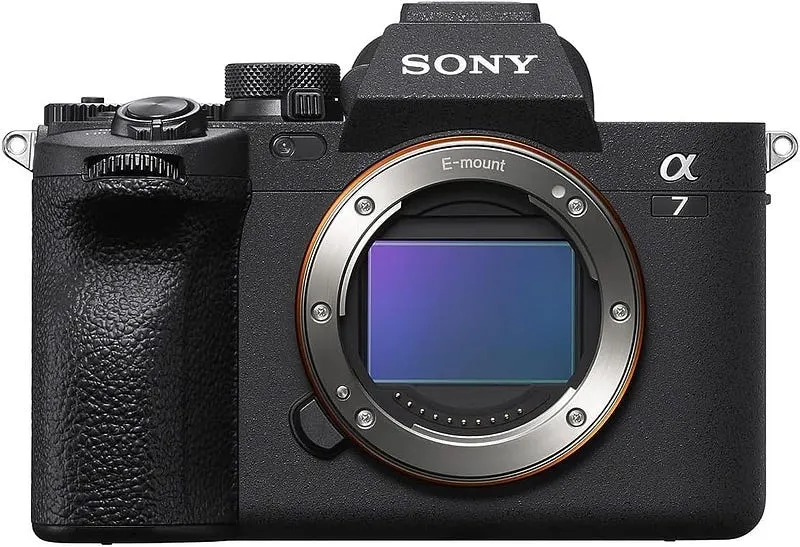
Traveling with a camera can be a thrilling experience, but lugging around a heavy bag full of gear can quickly become a burden. When I upgraded to the Sony a7 IV, I knew I needed a lens kit that was both versatile and compact. After months of research and countless hours spent testing different combinations, I’ve finally settled on a setup that I absolutely love.
My Travel Photography Style
Before diving into the lens recommendations, let me give you a little background on my photography style. I primarily focus on landscape and travel photography, with a strong emphasis on capturing candid moments and street scenes. I also enjoy shooting portraits of friends and family while on the road.
The Holy Trinity (and Why I Love It)
My current travel lens kit consists of three lenses:
- Sony FE 24–105mm f/4 G OSS: This is my workhorse lens. Its zoom range covers a wide variety of shooting situations, from expansive landscapes to intimate portraits. The image quality is exceptional, and the constant f/4 aperture provides consistent performance throughout the zoom range. Plus, the in-body stabilization (IBIS) on the a7 IV works seamlessly with the lens’s optical stabilization for incredibly sharp images, even in low light.
- Sony FE 16–35mm f/2.8 GM: For those wide-angle shots that truly capture the grandeur of a scene, this lens is indispensable. The f/2.8 aperture allows me to shoot in low-light conditions and create stunning depth of field effects. Its build quality is top-notch, and the sharpness is simply breathtaking.
- Sony FE 70–200mm f/4 G OSS: This telephoto zoom is perfect for wildlife photography, capturing distant subjects, and compressing perspectives. The constant f/4 aperture provides a good balance of reach and low-light performance. The image stabilization is excellent, making it easy to handhold the lens and capture sharp shots.
Why This Combination Works for Me
- Versatility: This kit covers a wide range of focal lengths, from ultra-wide to telephoto, allowing me to capture virtually any scene I encounter.
- Compactness: While not the absolute smallest setup, this kit is relatively compact and lightweight, making it easy to carry around all day.
- Image Quality: All three lenses deliver outstanding image quality, with excellent sharpness, color rendition, and contrast.
- Affordability: Compared to a full set of f/2.8 zooms, this kit is more budget-friendly while still offering exceptional performance.
A Note on Alternatives
- For a more budget-friendly option: Consider the Sony FE 24–105mm f/4 G OSS and the Sony FE 16–35mm f/4 OSS.
- For a more compact and lightweight setup: Explore prime lenses like the Sony FE 24mm f/1.4 GM, Sony FE 35mm f/1.8 FE, and Sony FE 50mm f/1.2 GM.
Final Thoughts
Finding the perfect travel lens kit is a personal journey. My recommendations are based on my own experiences and preferences. I encourage you to experiment and find what works best for you. Remember to consider your budget, travel style, and the types of photos you want to capture.
I hope this blog post has been helpful. Happy shooting!
Note: This blog post is a template. You can customize it with your own personal experiences, photos, and specific anecdotes.
I hope this helps! Let me know if you have any other questions.

Photo by Alexis Mette on Unsplash

Photo by Dustin Delatore on Unsplash

Written by
Marien CartelProfessional and Certified Digital Photographer born in the USA, with 22 years of experience in the field of photography.
Related Guides
Best Lens for Panasonic LUMIX S5: (2026 Guide & Reviews)
Unlocking the Cinematic Soul of the L-Mount System. What the Sigma 24–70mm f/2.8 DG DN gets right, what it does not, and who should buy it.

Best Lens for Wide Shots
The Ultimate Guide to the Best Lens for Wide Shots: Field-Tested Review & Personal Experience
Best Lenses for Interior Photography
Best Lenses for Interior Photography. Here is how the Canon R6 Mark II and Canon EOS R6 Mark II compare, and the one I keep going back to.